

Table of Contents
Introduction: Why Uptime Matters in LATAM & Asian Markets

In today’s always-online world, website uptime is not just a technical metric. It’s the quiet engine behind trust, traffic, and revenue. If your website targets users in Latin America (LATAM) or Asia, uptime becomes even more critical due to regional infrastructure differences, network latency, and varying internet stability.
Many LATAM and Asian countries experience fluctuating connectivity, undersea cable dependencies, and higher latency when servers are located far away. When your hosting server goes down or responds slowly, users don’t wait. They leave. Search engines notice too, and rankings quietly slip while competitors take the spotlight.
For entrepreneurs, bloggers, and businesses expanding into these fast-growing markets, reliable hosting uptime means smoother user experiences, better SEO performance, and consistent conversions. Choosing hosting with strong uptime guarantees and region-friendly infrastructure isn’t optional. It’s the foundation that keeps your website visible, accessible, and competitive across borders.
In this guide, you’ll learn how to pick hosting with the best uptime for LATAM & Asian markets, so your site stays online when it matters most.
What Is Hosting Uptime and Why It’s Important

Hosting uptime refers to the percentage of time your website stays online and accessible to visitors without interruption. It’s usually shown as a number like 99.9% or 99.99%, and while the difference looks tiny, its real-world impact is anything but small.
Even a short period of downtime can mean lost visitors, missed sales, and a damaged first impression. In competitive LATAM and Asian markets, where users often access sites on mobile networks and slower connections, a website that fails to load feels unreliable almost instantly.
Uptime also plays a direct role in SEO performance. Search engines favor websites that are consistently available. Frequent downtime can lead to crawling issues, reduced rankings, and lower visibility in search results. For new or growing websites, this can slow progress dramatically.
Beyond traffic and rankings, uptime builds trust. When users see your site load every time they visit, they’re more likely to stay longer, return later, and recommend it to others. In simple terms, good uptime keeps your digital doors open. Without it, even the best-designed website can fail to reach its audience.
Unique Hosting Challenges in LATAM & Asian Regions

Hosting a website for LATAM and Asian audiences comes with a different set of realities compared to North America or Europe. These regions are diverse, fast-growing, and full of opportunity, but the technical landscape can be uneven.
One major challenge is network latency. Many websites are hosted on servers located far away, often in the US or Europe. When users in Brazil, India, Indonesia, or the Philippines try to access those sites, data has to travel long distances, increasing load times and the risk of timeouts.
Another issue is infrastructure variability. While major cities may have strong internet connectivity, smaller regions often rely on less stable networks. Power outages, ISP congestion, and limited redundancy can lead to unexpected downtime if your hosting provider isn’t well-prepared.
Undersea cable dependency is also a factor, especially for island nations and coastal regions in Asia. Damage or maintenance to these cables can disrupt connectivity across entire countries, affecting site availability if no backup routing exists.
Finally, not all hosting providers offer local data centers or region-optimized routing for LATAM and Asia. Without regional presence, even a technically “good” host may struggle to deliver consistent uptime. That’s why choosing hosting built with these regions in mind is essential for long-term stability and performance.
How to Pick Hosting with the Best Uptime for LATAM & Asian Markets

Choosing the right hosting isn’t just about price or pretty dashboards. For LATAM and Asian audiences, it’s about reliability that actually works in the real world. Here’s how to make that choice with confidence 👇
Choose Hosting with Nearby Data Centers
The closer your server is to your audience, the faster and more reliable the connection tends to be. Look for hosts with data centers in or near key regions such as São Paulo, Mexico City, Singapore, Tokyo, Mumbai, or Sydney. Proximity reduces latency and improves uptime for local users.
Look for Verified Uptime Guarantees
Top-tier hosts publicly commit to uptime levels like 99.95% or 99.99%, backed by Service Level Agreements (SLAs). But don’t take marketing claims at face value. Seek verified uptime reports from independent sources and customer reviews to confirm real-world performance.
Prioritize Redundancy and Failover Systems
Good uptime isn’t just a percentage on a page. It’s the result of layered systems:
✔ redundant power supplies
✔ multiple network routes
✔ automatic failover if one server goes down
Ask your hosting provider about their redundancy architecture and how they handle hardware failures.
Use a CDN to Support Regional Availability
A Content Delivery Network (CDN) acts like a web of mini-servers around the globe. Even if your main host struggles in one region, CDNs keep content loading fast and reduce the impact of regional outages. For LATAM and Asia, a CDN with strong presence in São Paulo, Mexico, Singapore, and Mumbai can make a noticeable difference.
Check Real User Reviews & Performance Tests
Before you commit:
🔍 Look at real uptime reports on forums, G2, Trustpilot
🔍 Check speed & uptime tests tailored to LATAM and Asian locations
User feedback often reveals patterns that marketing glosses over.
Consider Scalable Hosting
If you expect growth, choose hosting that scales easily. Cloud-based platforms often adapt to traffic spikes and avoid overload — an important factor in maintaining uptime during peak events or campaigns.
By combining regional data centers, verified uptime guarantees, redundancy planning, CDNs, and solid review research, you’ll be well-equipped to pick hosting that keeps your site online and thriving across Latin America and Asia. 🚀
EXTRA- YOU CAN READ MORE ABOUT Best Website Builders for Small Businesses in LATAM & Asia BY VISIT THIS ARTICLE
Hosting Types and Their Impact on Uptime
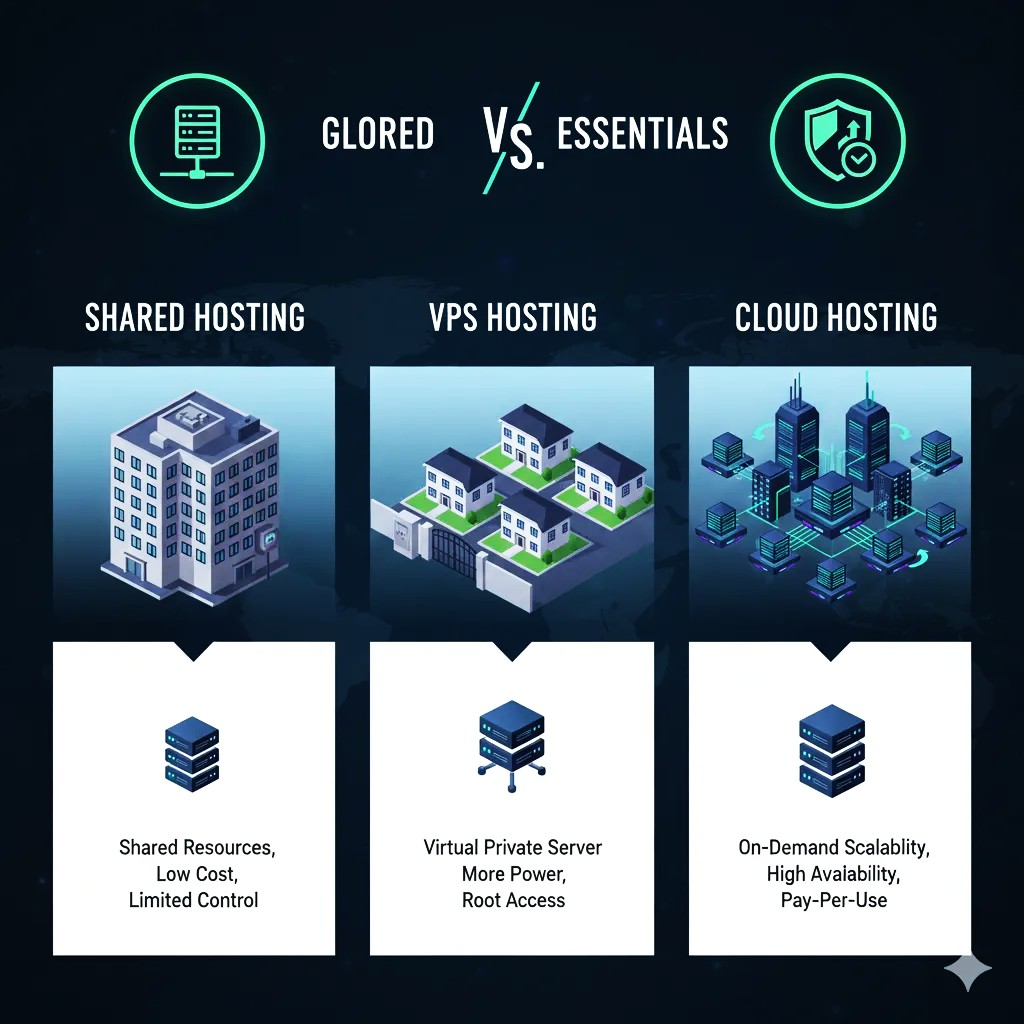
Not all hosting types are built the same, especially when uptime is the priority for LATAM and Asian markets. The type of hosting you choose directly affects stability, downtime risk, and how well your site handles regional traffic challenges.
Shared Hosting: Budget-Friendly but Limited
Shared hosting places multiple websites on a single server. While it’s affordable and beginner-friendly, uptime can suffer if one site consumes too many resources or experiences a spike in traffic. For small blogs or starter sites targeting LATAM or Asia, shared hosting can work, but it carries a higher risk of slowdowns and unexpected downtime.
VPS Hosting: Better Control, Better Stability
Virtual Private Servers (VPS) offer dedicated resources within a shared environment. This isolation improves uptime because neighboring websites can’t affect your performance. For growing websites or businesses expanding into regional markets, VPS hosting provides a solid balance between cost and reliability.
Cloud Hosting: Designed for High Uptime
Cloud hosting spreads your website across multiple servers instead of relying on just one. If one server fails, another instantly takes over. This built-in redundancy makes cloud hosting one of the best choices for consistent uptime in LATAM and Asian regions, where connectivity can be unpredictable.
Dedicated Hosting: Maximum Reliability at a Cost
With dedicated hosting, your website gets an entire server to itself. This minimizes downtime risks caused by other users and allows full control over server configuration. It’s ideal for high-traffic websites or enterprises that need maximum uptime, though it comes with higher costs and management complexity.
Which Hosting Type Is Best for LATAM & Asia?
For most websites targeting these regions, cloud hosting or a well-optimized VPS offers the best uptime-to-cost ratio. They handle traffic fluctuations better, recover faster from failures, and adapt well to regional infrastructure challenges.
Choosing the right hosting type is a strategic move. When uptime matters, the structure behind your hosting matters just as much as the provider itself.
Tools to Check Hosting Uptime Before You Buy

Before committing to a hosting plan, it’s smart to peek behind the curtain and see how well it actually keeps websites online. These uptime monitoring tools help you evaluate real performance—especially from vantage points near LATAM and Asian regions 🌏
Uptime Monitoring Tools You Can Use
1. UptimeRobot
A beginner-friendly tool that checks your website regularly (every 5 minutes on the free plan) and alerts you if downtime occurs.
👍 Easy setup
👍 Free plan available
📍 Good for quick checks before buying a host
2. Pingdom Tools
Offers advanced uptime and performance testing from multiple global locations. You can simulate checks closer to LATAM and Asia to see how hosting responds from those regions.
👍 Detailed reports
👍 Region-specific testing
📊 Paid plan with richer insights
3. GTmetrix
Primarily a speed & performance tester, but also reveals availability and load behavior from chosen test regions. Handy for evaluating hosting impact on performance in LATAM & Asia.
👍 Visual performance scores
👍 Test from multiple regions
⏱ Shows latency alongside uptime signals
4. StatusCake
Monitors uptime at frequent intervals and provides alerts via email, SMS, or other integrations. You can choose monitoring from specific regions, which is helpful when evaluating hosts for LATAM or Asian traffic.
👍 High check frequency
👍 Global monitoring points
5. Site24x7
A more advanced monitoring platform that tracks uptime, DNS response, SSL health, and server resource usage. Great for deeper analysis if you’re comparing several hosting candidates.
👍 Robust reporting
👍 Enterprise-level features
How to Use These Tools Before You Buy Hosting
✨ Step 1: Enter the demo or existing site of the hosting provider you’re considering.
✨ Step 2: Choose test locations close to your audience (e.g., Brazil, Singapore, Tokyo).
✨ Step 3: Run multiple tests at different times of day.
✨ Step 4: Compare results: look for consistency, low downtime, and minimal latency.
What to Look For in Results
🔹 Uptime above 99.9% consistently
🔹 Fast response times from LATAM & Asia nodes
🔹 Few or no failed checks
🔹 Stable performance across multiple tests
Using these tools helps you see through marketing claims and discover the real uptime behavior of a hosting provider before you make a decision. It’s like test-driving a car before signing the papers—except this one keeps your website live instead of parked 🚗💻
Want help interpreting specific uptime results? I can walk through what they mean!
Red Flags That Signal Poor Uptime

Not all hosting problems are obvious at first glance. Some warning signs hide behind glossy landing pages and big promises. If you spot these red flags early, you can avoid hosting that quietly sabotages your uptime, especially in LATAM and Asian markets.
Vague or Unrealistic Uptime Guarantees
If a hosting provider claims “100% uptime” without a clear Service Level Agreement (SLA), that’s a red flag. Reliable hosts are transparent about realistic numbers like 99.9% or 99.99% and clearly explain what happens if they fail to meet them.
No Mention of Data Center Locations
When a host doesn’t clearly list where their data centers are located, uptime often suffers for international audiences. For LATAM and Asia, the absence of regional servers usually means higher latency, more timeouts, and increased downtime during peak hours.
Overcrowded Shared Servers
Extremely cheap hosting plans often pack too many websites onto a single server. When one site experiences a traffic spike or error, it can drag down everyone else. This “noisy neighbor” effect is a common cause of poor uptime.
Lack of Redundancy and Backups
Hosting providers that don’t talk about backup power, multiple network routes, or failover systems are risky. Without redundancy, a single hardware or network issue can take your site offline for hours.
Frequent Negative Reviews About Downtime
One or two bad reviews happen to everyone, but consistent complaints about outages, slow recovery times, or unresponsive support are strong warning signs. Always scan reviews specifically mentioning uptime and availability.
Slow or Unreliable Customer Support
When uptime issues occur, fast support matters. If support is limited to slow ticket systems or unavailable during your target region’s peak hours, downtime can last much longer than necessary.
Outdated Technology and Poor Transparency
Hosts using old server hardware, outdated software, or unclear infrastructure details often struggle with stability. Reliable providers are open about their tech stack and regularly upgrade their systems.
Conclusion & Call-to-Action:
Choosing hosting with strong uptime is not a technical luxury. It’s a strategic decision that directly affects your website’s visibility, trust, and long-term growth in LATAM and Asian markets. From understanding uptime percentages and regional challenges to selecting the right hosting type and avoiding red flags, every step you take brings your site closer to consistent performance.
In regions where connectivity can vary and competition is growing fast, reliable uptime keeps your website accessible when users need it most. The right hosting partner, backed by regional data centers, verified uptime guarantees, and solid infrastructure, helps your site stay stable, searchable, and ready to scale.
👉 Call to Action:
Before purchasing any hosting plan, take a few minutes to check uptime history, data center locations, and real user reviews. Test performance from LATAM and Asian regions, choose reliability over short-term savings, and invest in hosting that keeps your website online, trusted, and growing.