Table of Contents
Introduction: Why Website Builder Tools Matter for Client Conversions
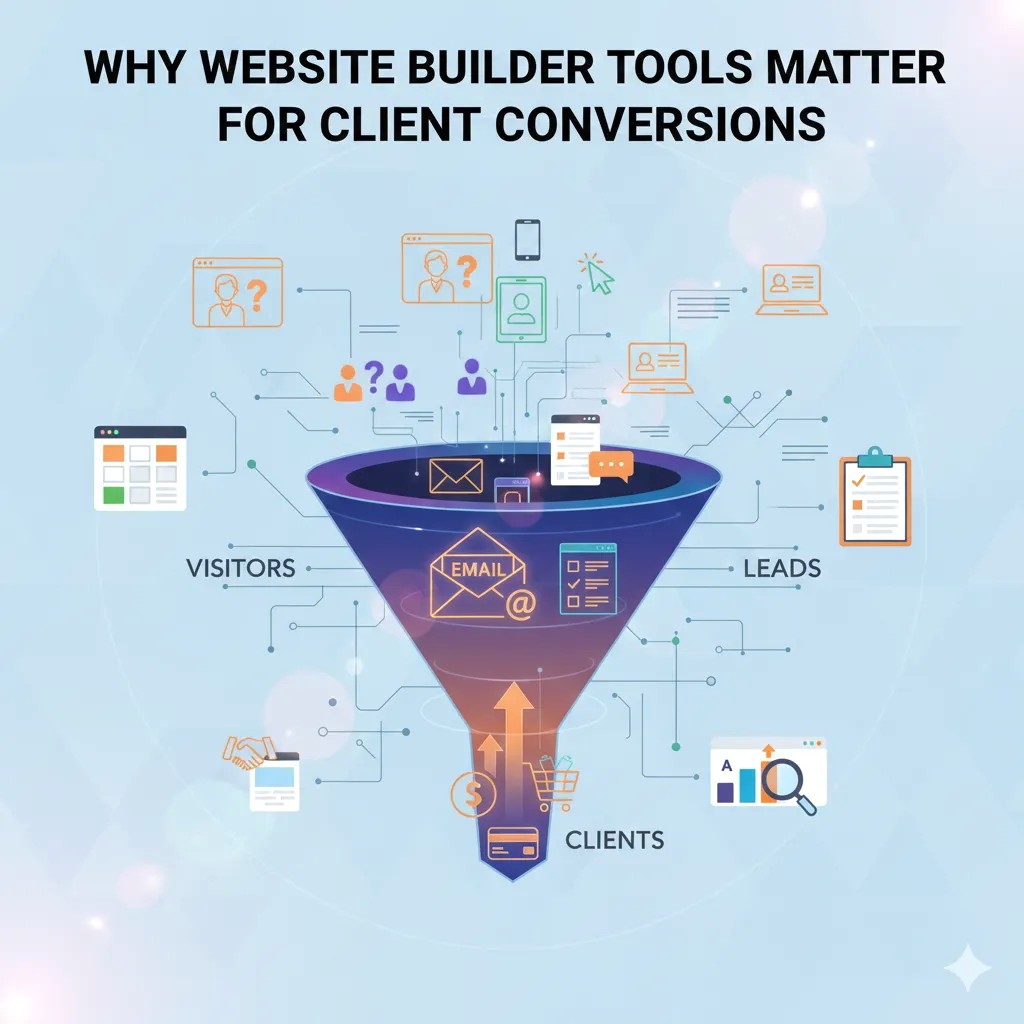
In today’s fast-paced digital world, your website often serves as the first point of contact between your business and potential clients. A well-designed site can capture attention, build trust, and guide visitors toward taking action, while a poorly built one can turn prospects away in seconds.
This is where website builder tools that convert more clients come into play. Modern website builders aren’t just about creating pretty pages—they combine conversion-focused templates, fast performance, mobile optimization, and integrated lead-capture tools to help businesses turn visitors into paying clients.
For U.S. businesses in 2025, the competition for attention is fierce. Visitors expect fast-loading pages, clear messaging, and a seamless experience across devices. By choosing the right website builder, you can simplify the design process, implement best practices for conversions, and optimize your site continuously to improve client acquisition rates.
In short, the right website builder does more than make your site look professional—it acts as a conversion engine, driving more leads, bookings, and sales for your business.
Key Features That Boost Client Conversions
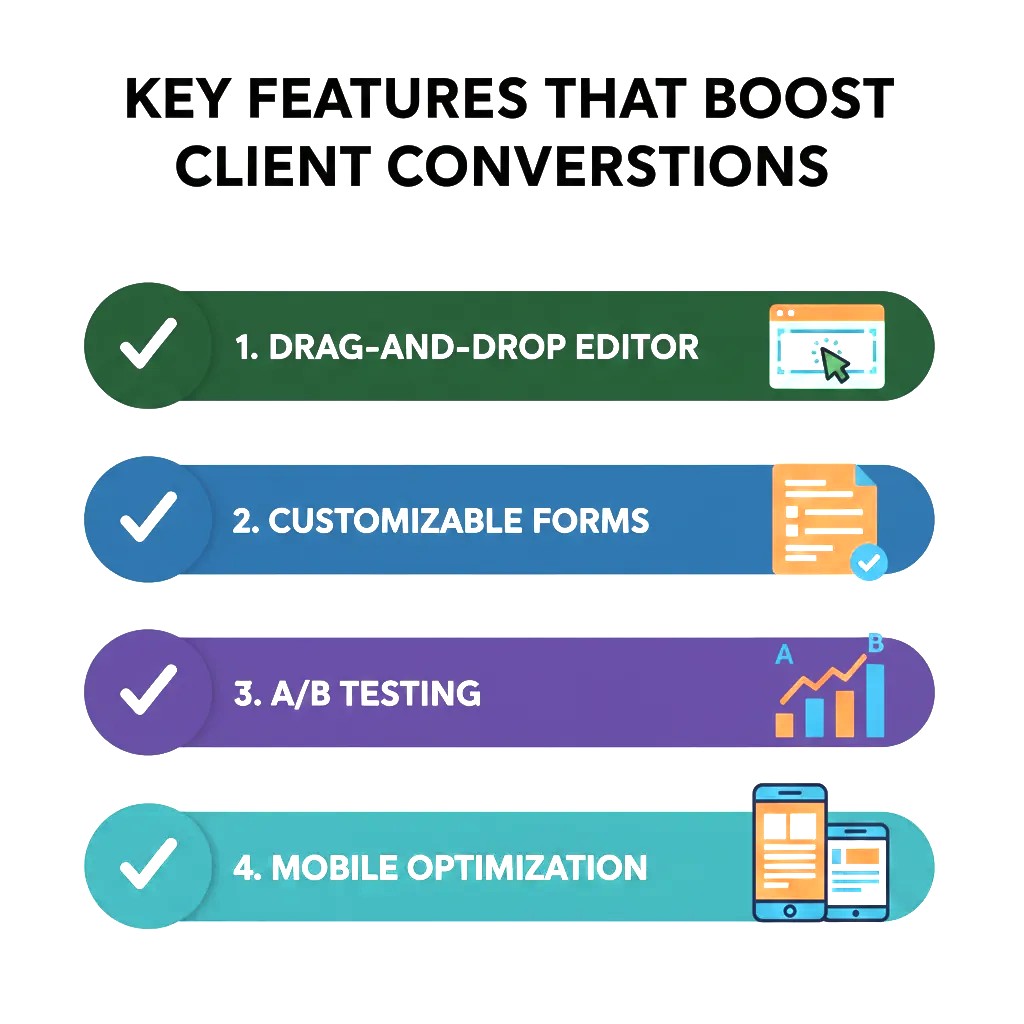
To maximize client acquisition, a website builder needs more than just design flexibility. The following key features ensure your site engages visitors effectively and converts them into paying clients:
To maximize client acquisition, a website builder needs more than just design flexibility. The following key features ensure your site engages visitors effectively and converts them into paying clients:
1. Conversion-Optimized Templates
Pre-designed templates that follow proven conversion principles make it easier to create high-performing pages. These templates focus on strategic placement of headlines, call-to-action buttons, trust signals, and content blocks to guide visitors toward taking action.
2. Built-In Forms & CRM Integrations
Capturing leads directly through your website is essential. Builders with native contact forms, email signup forms, and CRM integrations streamline lead collection and management. This ensures all prospects are captured automatically and added to your sales or marketing funnel without manual work.
3. Fast Loading & Mobile Responsiveness
Page speed and mobile performance are critical for keeping visitors engaged. A slow or poorly optimized website can result in lost leads. Modern builders optimize loading times, mobile layouts, and responsive designs to deliver a seamless experience across all devices.
4. Analytics & A/B Testing Tools
Understanding visitor behavior is crucial to improving conversions. Builders with built-in analytics dashboards and A/B testing functionality allow you to test headlines, CTAs, layouts, and colors to determine which combinations drive the most client conversions.
5. SEO & On-Page Optimization
SEO features like meta tags, structured data, and fast-loading pages help attract organic traffic. More targeted visitors increase the likelihood of conversions, making SEO-friendly website builders a powerful tool for client acquisition.
6. Personalization & Dynamic Content
Some advanced builders allow you to personalize content based on visitor behavior, location, or referral source. Tailored messaging increases engagement and encourages users to convert.
7. Ease of Use & Scalability
Finally, a website builder must be intuitive and scalable. Easy drag-and-drop editing saves time, while scalable features support business growth—allowing you to add more pages, products, or campaigns without switching platforms.
These features collectively ensure that your website isn’t just visually appealing—it’s a lead-generation machine designed to convert more clients efficiently and consistently.
Top Website Builder Tools That Convert More Clients
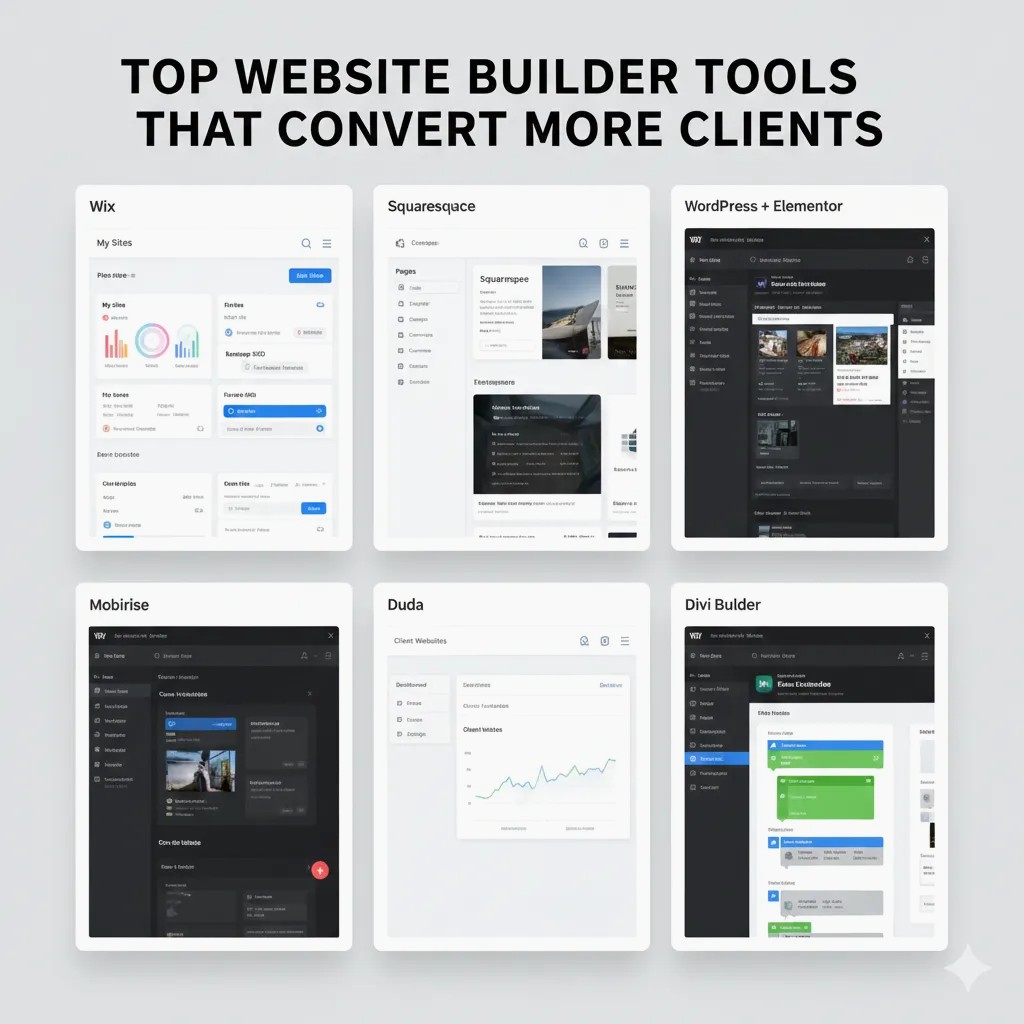
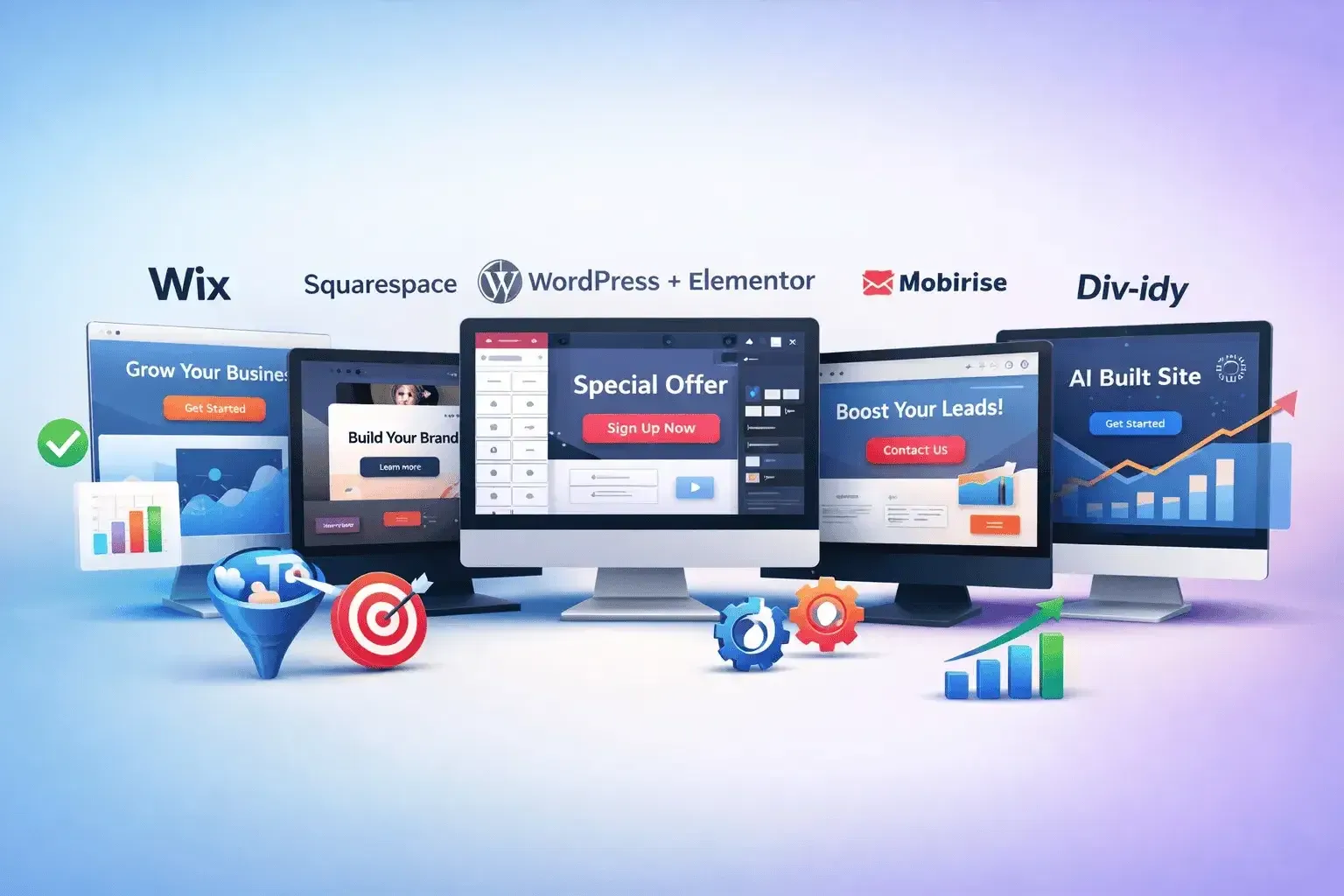
Here’s a curated list of high‑impact website builder tools in 2025 that help U.S. businesses create sites that don’t just look good, but convert visitors into clients. These are SEO‑friendly, conversion‑focused, and widely used by marketers and small businesses alike 👇
Here’s a curated list of high‑impact website builder tools in 2025 that help U.S. businesses create sites that don’t just look good, but convert visitors into clients. These are SEO‑friendly, conversion‑focused, and widely used by marketers and small businesses alike 👇
#: Wix – Best All‑Around for Conversions
Wix remains one of the most popular website builders thanks to its AI design assistant, drag‑and‑drop editor, and extensive template library. It includes built‑in SEO tools, marketing integrations, and mobile‑friendly themes that help sites load fast and rank well—all of which improve user engagement and conversions. digitalgenius.info
Why it converts:
• AI‑powered design and content suggestions
• 900+ customizable templates
• Built‑in marketing and CRM tools
Best for: Small businesses, freelancers, service providers
#: Squarespace – Best for Professional, High‑Converting Branding
Squarespace combines stunning visuals with solid SEO and marketing features. Recent updates in 2025 have added AI‑powered tools and enhanced customization, making it easier to design conversion‑optimized pages even without coding. TechRadar+1
Why it converts:
• Elegant templates with conversion‑focused layouts
• Built‑in analytics + marketing tools
• Instant payment links and mobile optimization
Best for: Creatives, consultants, and premium brands
#: WordPress + Elementor – Best for Flexible, High‑Conversion Sites
WordPress paired with a builder like Elementor gives extreme design flexibility plus conversion‑oriented widgets like forms, popups, and A/B testing modules. Elementor powers millions of sites globally and is known for helping businesses craft tailored, high‑conversion pages. Wikipedia
Why it converts:
• Full control over page layout and SEO
• Vast ecosystem of plugins for forms, analytics, and CRMs
• Strong mobile optimization
Best for: Agencies, advanced marketers, content‑rich sites
#: Mobirise – Best Free/Offline Conversion Tool
Mobirise is a free drag‑and‑drop builder with themes and conversion‑ready blocks. Its newer AI‑powered version can generate full sites from prompts, making it fast and straightforward to launch lead‑generating pages without coding. Wikipedia
Why it converts:
• Zero coding required
• Prebuilt blocks like CTAs, forms, and galleries
• Option to export sites for hosting anywhere
Best for: Budget‑focused solopreneurs and hobby businesses
#: Div‑idy – Emerging AI Website Builder (Innovative Option)
Div‑idy uses natural‑language prompts to generate full websites automatically, including layout and initial content. It represents the bleeding edge of AI‑assisted conversion‑focused site building, making setup fast and intuitive. Wikipedia
Why it converts:
• Creates complete pages from a single prompt
• Fast turnaround with minimal design effort
• Great for testing conversion ideas quickly
Best for: Early adopters and AI‑focused businesses
Quick Tips When Choosing a Converter‑Focused Builder
✔ Always prioritize built‑in forms and CRM integrations
✔ Pick support for mobile and SEO tools
✔ Look for analytics + A/B testing to refine conversion flows
These tools span from beginner‑friendly (Wix, Squarespace) to flexible and powerful (WordPress + Elementor), and even cutting‑edge AI options (Div‑idy). Each helps you build sites that capture leads effectively and turn more visitors into clients in 2025 🚀
Comparison Table: Top Website Builder Tools That Convert More Clients
| Website Builder | Key Features | Pricing (Starts at) | Pros | Cons | Best For |
|---|---|---|---|---|---|
| Wix | Drag-and-drop editor, AI design, 900+ templates, built-in SEO & marketing, mobile optimized | $16/mo | Very easy to use, AI-powered design, strong template library | Can get expensive with apps, some speed issues | Small businesses, freelancers, service providers |
| Squarespace | Elegant templates, built-in analytics, payment integration, mobile-first design | $16–$26/mo | Professional design, SEO & marketing tools, mobile optimized | Less flexible than WordPress, fewer integrations | Creatives, consultants, premium brands |
| WordPress + Elementor | Full design flexibility, drag-and-drop builder, A/B testing, plugins for forms & CRM | $5–$25/mo (hosting extra) | Complete control, powerful plugins, strong SEO | Steeper learning curve, hosting required | Agencies, advanced marketers, content-rich sites |
| Mobirise | Free offline builder, drag-and-drop, conversion-focused blocks | Free / $99 pro version | No coding, simple, export anywhere, fast | Limited advanced features, fewer templates | Budget-focused solopreneurs, small projects |
| Div-idy | AI-generated websites from prompts, automatic layout, content generation | $19–$49/mo | Ultra-fast setup, AI-driven, minimal design effort | New platform, fewer integrations, less control | Early adopters, AI-focused businesses |
How to Use This Table
- Match your goals: Are you focused on speed, design, or advanced conversions?
- Consider your budget: Free or low-cost builders work for small projects, but advanced tools may offer better ROI for client-heavy businesses.
- Check integrations: Forms, CRM, and email marketing integrations can save time and increase lead capture efficiency.
- Factor scalability: Make sure the builder can grow with your business, especially if you plan to add e-commerce or multiple landing pages.
How to Choose the Right Website Builder for Your Business
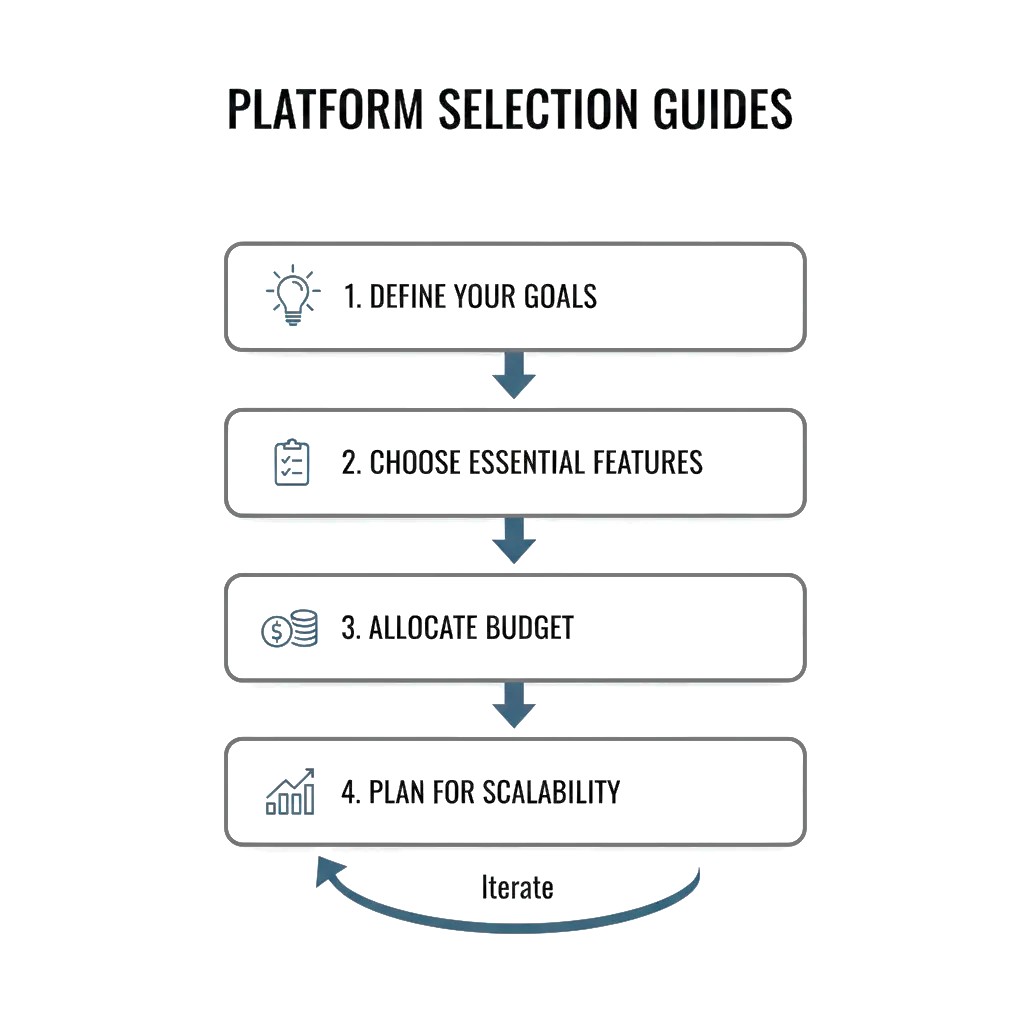
Selecting the right website builder is crucial to maximize client conversions. It’s not just about aesthetics—your choice impacts lead generation, user experience, scalability, and overall business growth. Here’s a step-by-step guide to help you make the right decision in 2025:
1. Define Your Business Goals
Start by clarifying what you want your website to achieve:
- Generate leads
- Sell products or services
- Showcase a portfolio
- Educate or inform your audience
Understanding your goals will guide which builder features are essential. For example, e-commerce sites need payment integrations, while lead-generation sites need robust form and CRM tools.
2. Match Features to Your Needs
Different website builders excel in different areas:
- Templates & design flexibility: Do you need pre-made layouts or full customizability?
- Conversion tools: Forms, pop-ups, and CTAs integrated into the platform.
- SEO & marketing tools: Built-in SEO optimization, email campaigns, and analytics dashboards.
- Mobile responsiveness & speed: Fast, mobile-optimized pages are critical for keeping visitors engaged.
Prioritize features that directly support your conversion goals.
3. Evaluate Ease of Use vs. Customization
- Beginners & small businesses: Drag-and-drop builders like Wix or Squarespace allow quick setup with minimal learning curve.
- Advanced marketers & agencies: WordPress with Elementor or AI-driven builders like Div-idy offer deeper customization and advanced features but may require more technical skill.
Balance simplicity with the level of control you need.
4. Check Pricing and Scalability
- Consider monthly or annual plans and whether features match the cost.
- Look for scalability: Will the builder support multiple landing pages, e-commerce, or advanced integrations as your business grows?
5. Assess Integrations & Ecosystem
A builder is more valuable when it connects seamlessly with other tools:
- CRM systems
- Email marketing platforms
- Analytics & reporting tools
- Payment gateways for e-commerce
Good integrations ensure smooth workflows and help capture and nurture leads efficiently.
6. Test Before Committing
Most builders offer free trials or demos. Use these to:
- Test the editor and templates
- Check page load speeds and mobile responsiveness
- Try forms, CTAs, and integrations
Hands-on testing reduces the risk of picking a platform that doesn’t fit your workflow or conversion goals.
EXTRA- YOU CAN READ MORE ABOUT How to Build a Professional Website Under $50 Step‑by‑Step
Quick Tip
The best website builder is the one that aligns with your business goals, simplifies lead capture, supports future growth, and enables continuous optimization. Choosing wisely upfront saves time, increases conversions, and sets your business up for long-term success.
Common Mistakes to Avoid When Using Website Builder Tools
Even the best website builder won’t guarantee client conversions if it’s used incorrectly. Many businesses make avoidable mistakes that reduce engagement, leads, and sales. Here are the most common pitfalls to watch out for:
1. Overloading Pages with Too Much Content
Cluttered pages with excessive text, images, or multiple offers confuse visitors. Focus on clear messaging, concise headlines, and a single call-to-action (CTA) per page to guide users toward the desired action.
2. Weak or Unclear Calls-to-Action
Generic buttons like “Submit” or “Click Here” don’t communicate value. Use action-driven CTAs such as “Get Your Free Quote” or “Start My Free Trial” to clearly show visitors what they gain.
3. Ignoring Mobile Optimization
With most web traffic coming from mobile devices, a page that looks great on desktop but breaks on mobile will lose leads. Always preview layouts on different screen sizes and ensure forms, buttons, and images display correctly.
4. Skipping A/B Testing
Relying on a single page version means guessing what works. A/B testing headlines, CTAs, colors, and layouts allows you to improve conversion rates based on actual visitor behavior.
5. Poor Form Design
Asking for too much information upfront increases friction and reduces submissions. Collect only essential details initially, then gather more information later through follow-ups or email sequences.
6. Neglecting Page Speed and Performance
Heavy images, unoptimized media, or unnecessary scripts can slow down your site. Slow pages frustrate visitors and reduce conversions. Optimize images, leverage caching, and choose a fast hosting provider.
7. Not Integrating Marketing & Analytics Tools
Failing to connect forms and pages to email marketing, CRM, or analytics platforms can result in lost leads and missed optimization opportunities. Always ensure proper integrations for tracking, nurturing, and follow-up campaigns.
Key Takeaway:
Avoiding these common mistakes ensures your website builder is a powerful conversion tool rather than just a visually appealing site. Focus on clarity, speed, mobile experience, and data-driven optimization to maximize client acquisition.
Conclusion & Call-to-Action
Choosing the right website builder in 2025 goes beyond aesthetics—it’s about creating sites that capture leads, engage visitors, and turn them into paying clients. By focusing on conversion-optimized templates, mobile responsiveness, fast performance, integrated forms, and analytics, you can transform your website into a powerful client-acquisition engine.
Every business, whether a solopreneur, agency, or established company, benefits from tools that simplify design while maximizing conversions. Testing different layouts, CTAs, and features ensures continuous improvement and higher client engagement over time.
Call-to-Action:
Start building your high-converting website today! Choose a website builder that aligns with your goals, set up your first lead-focused page, and begin optimizing it to capture more clients effectively. The sooner you launch, the faster you’ll see measurable growth in leads and revenue.